Outlined Dashed Tracing: A Designer's Guide to Educational Typography
In the landscape of modern graphic design, typography is more than just selecting a beautiful font; it's about solving communication problems. When the goal shifts from pure aesthetics to functional instruction, the tools must adapt. This is where the specialized utility of Outlined Dashed Tracing becomes a game-changer for educators, content creators, and designers working within the educational sector. By merging visual appeal with pedagogical function, this style bridges the gap between playful creativity and structured learning.
The Anatomy of Functional Typography
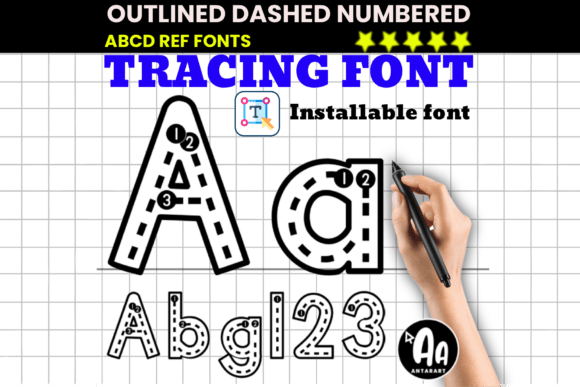
The Outlined Dashed Tracing font collection is engineered to support letter formation and handwriting skills through interactive design. Unlike standard typefaces, these fonts feature hollow letter shapes combined with dashed interiors. This specific visual style serves a dual purpose: it provides a boundary for coloring (strengthening letter recognition) and offers a path for tracing (enhancing fine motor control).
For designers creating educational assets, understanding the technical structure is key. The collection includes variations such as the ABC Outline Dashed (Dotted) style and the Outlined-Dashed (Numbered) version. The latter is particularly sophisticated, integrating numbered stroke orders within the letterform. This guides learners through the correct sequence of movement, promoting muscle memory—a critical component in UX design applied to physical writing.
Visual Hierarchy and Brand Identity in Education
When building a brand identity for an educational product or a classroom environment, consistency is paramount. Outlined Dashed Tracing allows designers to create a cohesive visual hierarchy across various materials. Because the collection includes uppercase and lowercase letters, numbers (0–9), and common symbols, it provides a comprehensive toolkit for everything from simple alphabet practice sheets to complex classroom décor.
Consider the impact on user experience (UX). In traditional web or UI design, we focus on how a user navigates a screen. In educational design, the user navigates a physical page. The "Outlined Dashed" style acts as a UI element on paper, guiding the user's hand just as a button guides a click. This makes it an invaluable asset for creating:
- Interactive Worksheets: Moving beyond static text to engage students actively.
- Bulletin Board Letters: Creating visually cohesive classroom environments that reinforce learning objectives.
- Editable Student Templates: Personalizing the learning experience to build confidence.
Practical Applications for Creative Professionals
While rooted in traditional school handwriting styles, the application of these fonts extends into broader creative projects. Graphic designers and marketers can leverage this style to evoke a sense of approachability, nostalgia, or hands-on engagement in their visual communication.
Marketing and Packaging Design
In packaging design, particularly for products targeting children or educational markets, the Outlined Dashed Tracing style signals interactivity. It suggests that the product is not just to be consumed, but to be engaged with. It can be used on back-to-school packaging to highlight "learn to write" features or on stationery branding to emphasize quality and usability.
Digital Content and Social Media
For social media graphics, this typography style creates a distinct "work-in-progress" aesthetic that is currently trending. It is perfect for "fill-in-the-blank" style engagement posts or educational tips. Furthermore, in digital marketing for e-learning platforms, using this font in UI elements can make the interface feel more friendly and less intimidating for young learners.
Evaluating Design Assets for Quality
When integrating Outlined Dashed Tracing into your workflow, apply the same rigorous standards you would to any premium design asset. Here are key factors to evaluate:
- Scalability: Ensure the vector paths remain crisp whether printed on a large poster or a small flashcard.
- Readability: The dashes must be distinct enough to guide the eye (and hand) without causing visual clutter.
- Compatibility: Verify that the font integrates smoothly with your preferred design software (e.g., Adobe Illustrator, Canva, Procreate) to streamline your production process.
Remember that while these fonts handle the structure, the surrounding design elements—color palette, paper texture, and layout—determine the final impact. A high-contrast color scheme can make the tracing paths pop, while a softer palette might be better for calming, focused activities.
Conclusion
Typography is a powerful tool for education, and Outlined Dashed Tracing represents a thoughtful intersection of design and pedagogy. By utilizing these specialized assets, designers can create materials that do more than just look good—they actively teach. Whether you are developing a comprehensive handwriting book, custom classroom décor, or a digital learning app, incorporating this structured yet creative typography ensures your projects are both visually engaging and functionally effective, ultimately helping learners build the confidence they need to succeed.